Advanced AI Cloud Computing & DevOps Programme
Master cloud and DevOps tools like Docker, Kubernetes, and Terraform to build, automate, and scale modern systems.
Unlock a Premium Learning Experience
Advanced AI Cloud Computing & DevOps Programme
Master cloud and DevOps tools like Docker, Kubernetes, and Terraform to build, automate, and scale modern systems.
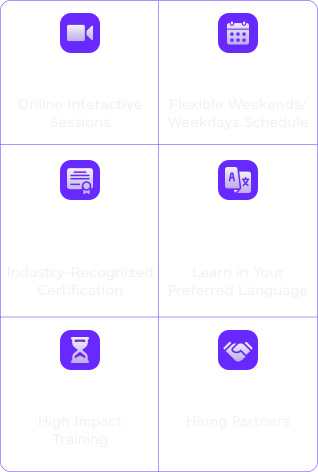
Live Online Classes
By Industry Experts & Intel Engineers
4/6 Months Duration
Weekday/Weekend Classes
Industry Specific Curriculum
Designed by Intel SMEs
Learn in Your Own Language
English, Hindi, Telugu & Tamil
1:1 Doubt Sessions
Doubt Sessions with Top SMEs
Placement Assistance
1000+ Hiring Partners
Master In Demand Skills
Python, SQL, ML, MLOps, Generative AI, Agentic AI, etc.
Industry-Grade Projects
20+ Projects + 1 Capstone Project
Master cloud and DevOps tools like Docker, Kubernetes, and Terraform to build, automate, and scale modern systems.
Unlock Your AI Career Now!
By submitting, I agree to be contacted via phone, SMS, or email for offers & products, even if I am on a DNC/NDNC list
CAREER OUTCOMES
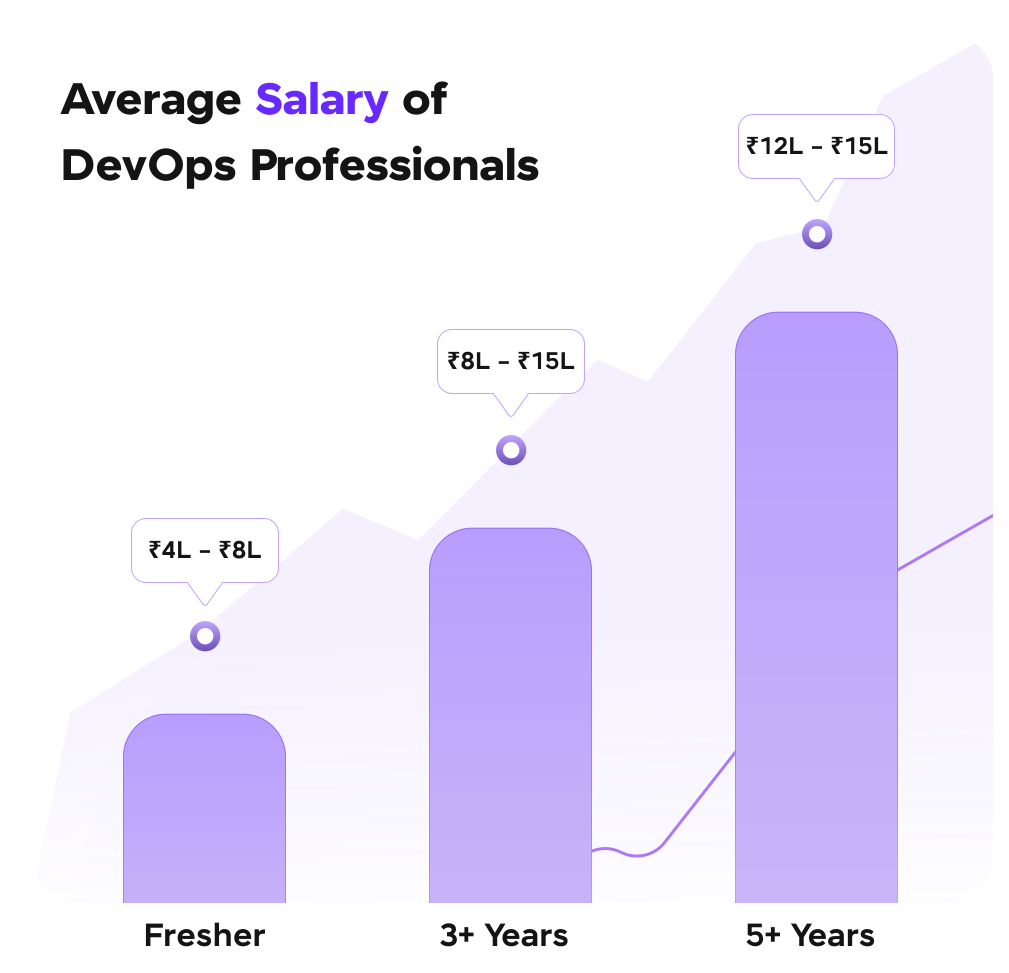
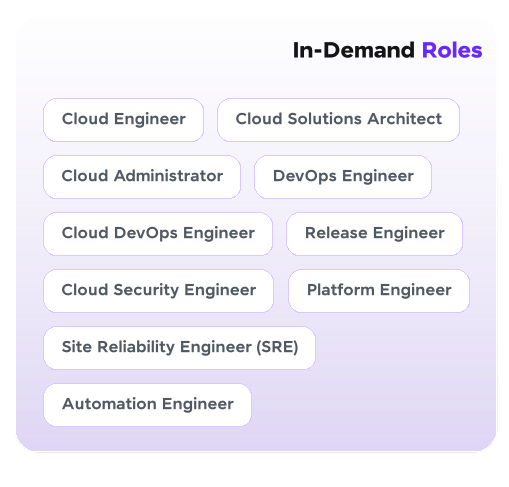
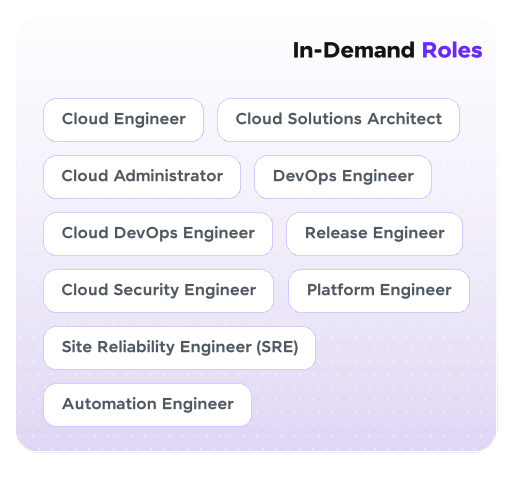
Discover career paths in DevOps and the salary potential across experience levels.
CAREER OUTCOMES
Discover career paths in DevOps and the salary potential across experience levels.
PROGRAMME CURRICULUM
Learn cloud infrastructure, DevOps practices, and modern deployment workflows through a complete learning path.
Understand AI foundations and AI-assisted DevOps workflows
Automate infrastructure and CI/CD processes using AI-powered tools
Implement AI-driven deployment, observability, and monitoring practices
Apply AIOps concepts for system analysis and operational efficiency
Strengthen DevSecOps and cloud security workflows using AI tools
Understand AI foundations and AI-assisted DevOps workflows
Automate infrastructure and CI/CD processes using AI-powered tools
Implement AI-driven deployment, observability, and monitoring practices
Apply AIOps concepts for system analysis and operational efficiency
Strengthen DevSecOps and cloud security workflows using AI tools
SUCCESS STORIES
GUIDED BY EXPERT
Get hands-on learning and mentorship from professionals working across cloud and DevOps environments.
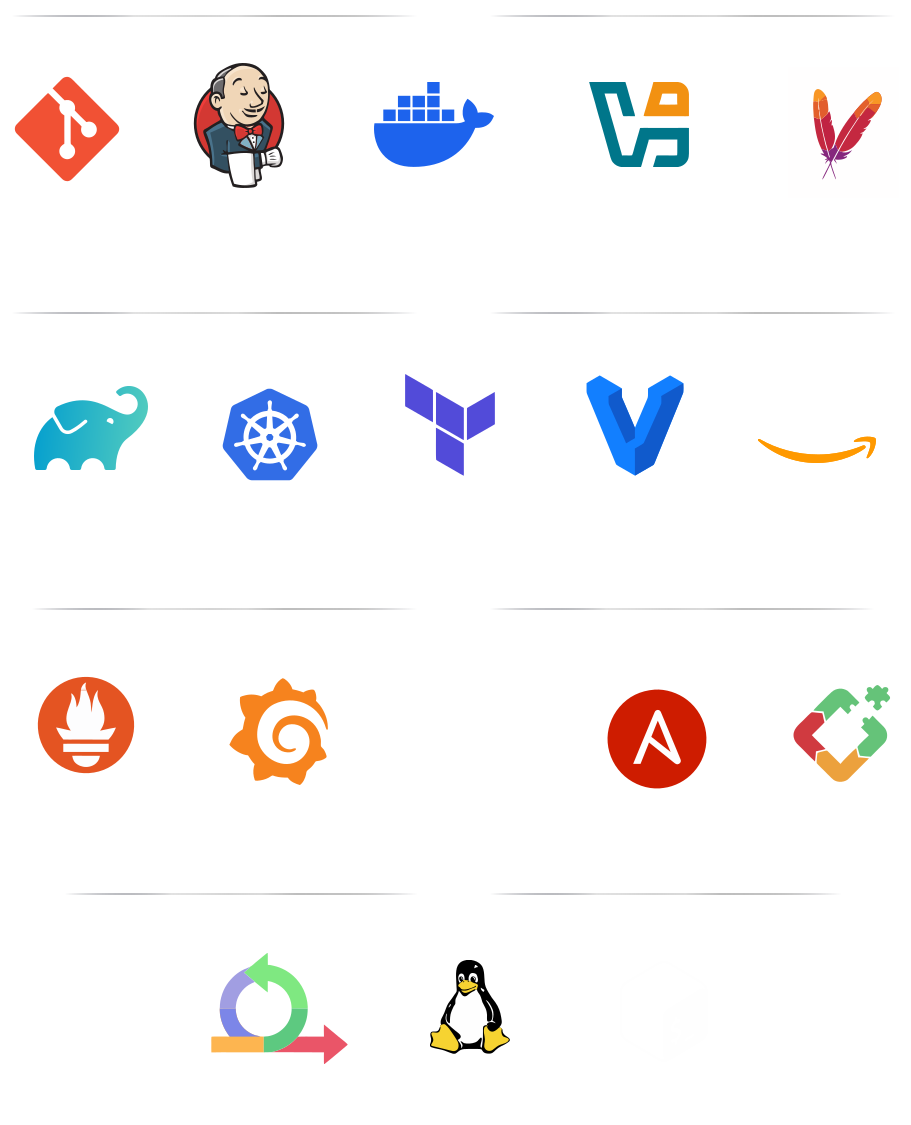
TOOLS YOU'LL USE
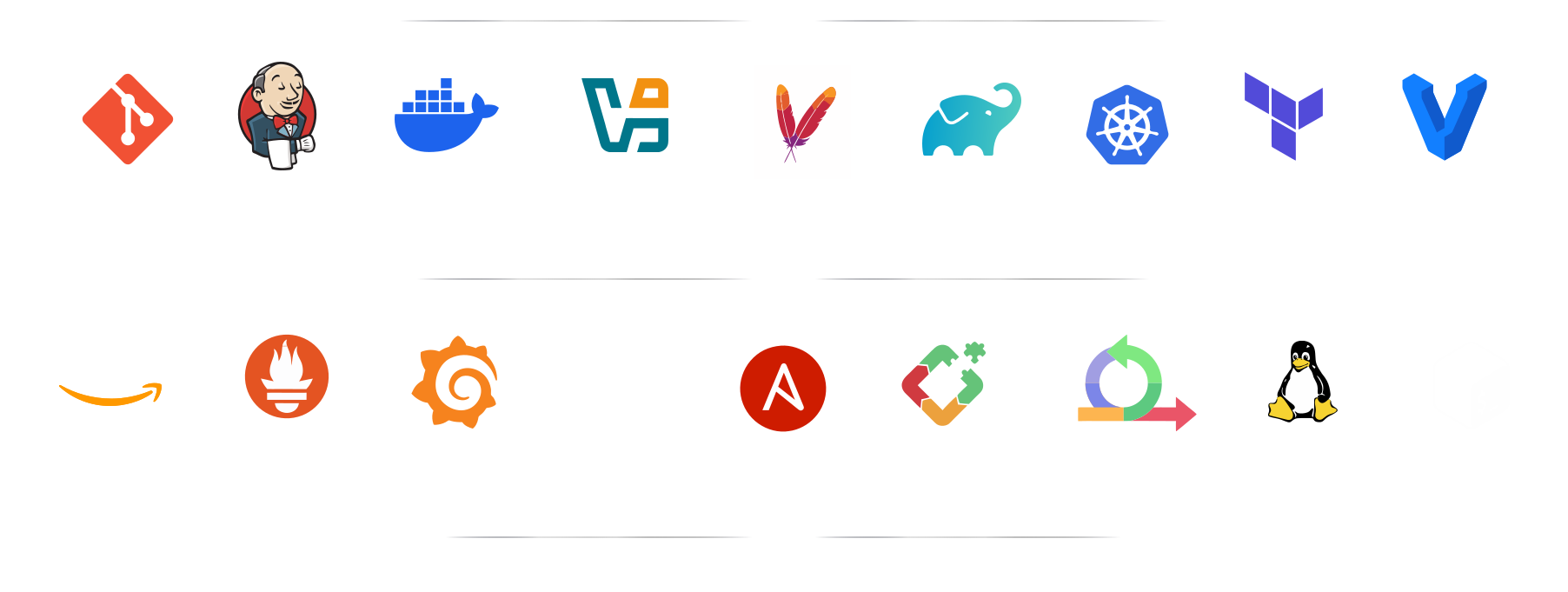
Work with industry-standard tools used to build, deploy, and scale modern cloud systems.
PROJECT-BASED LEARNING
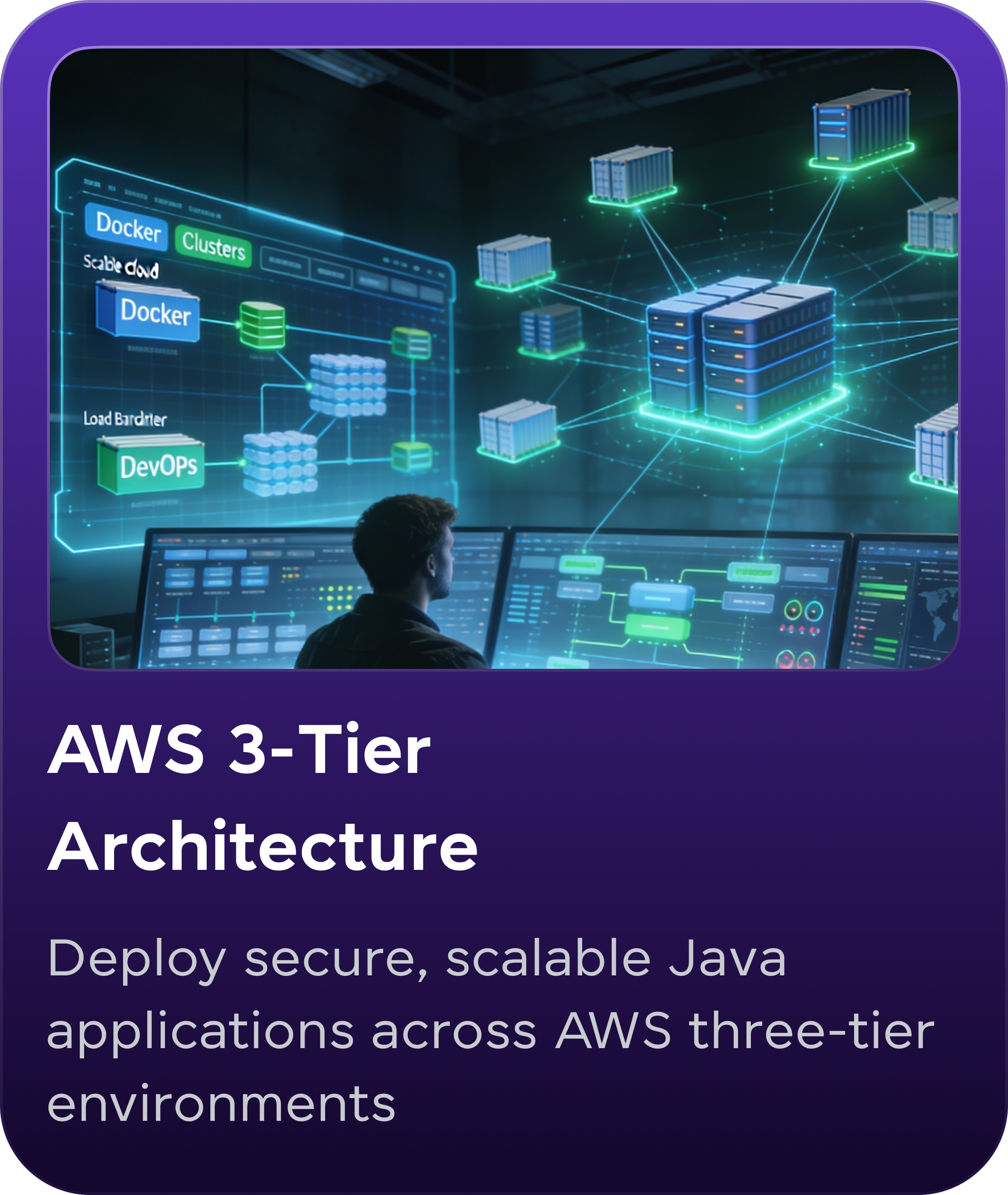
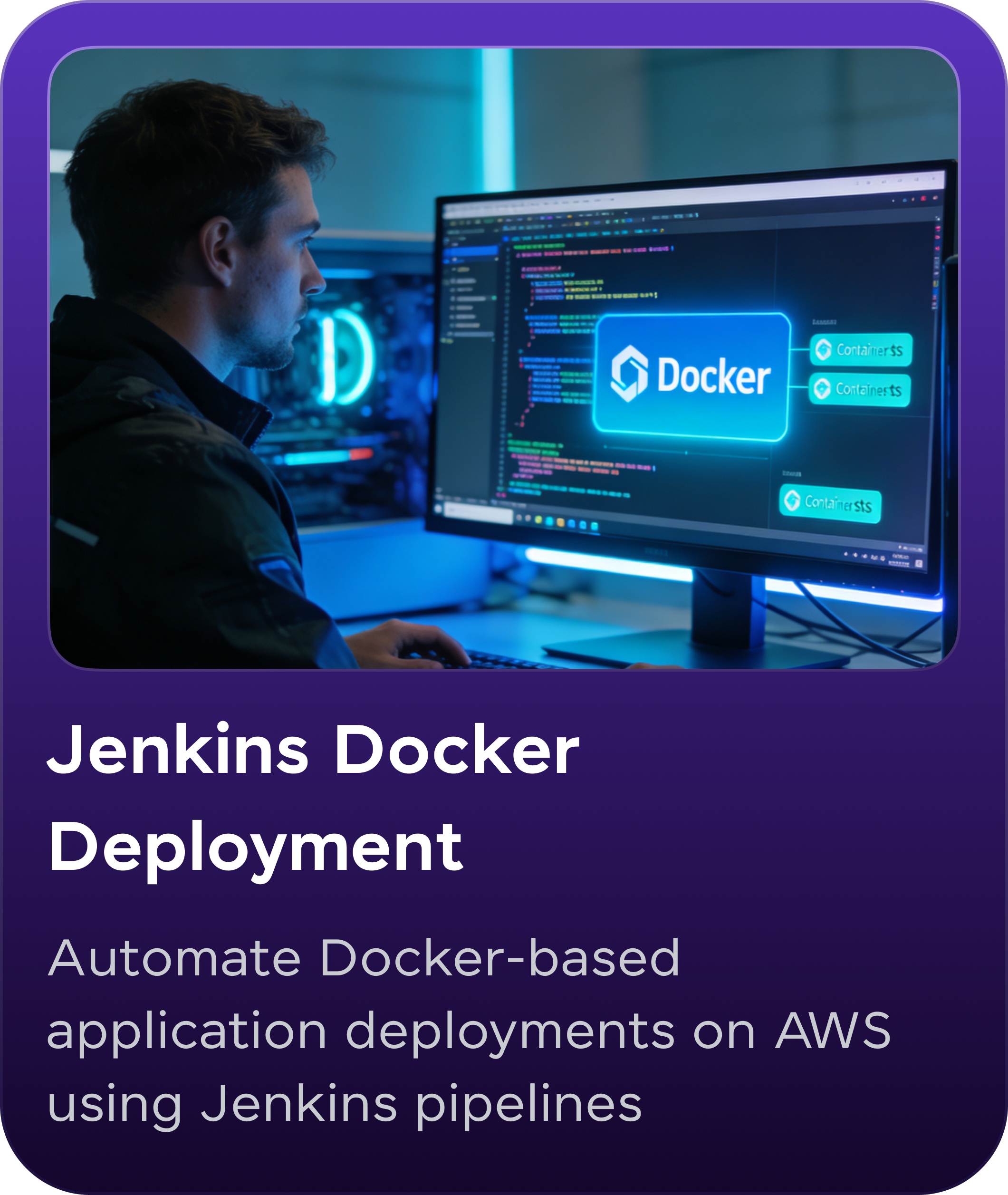
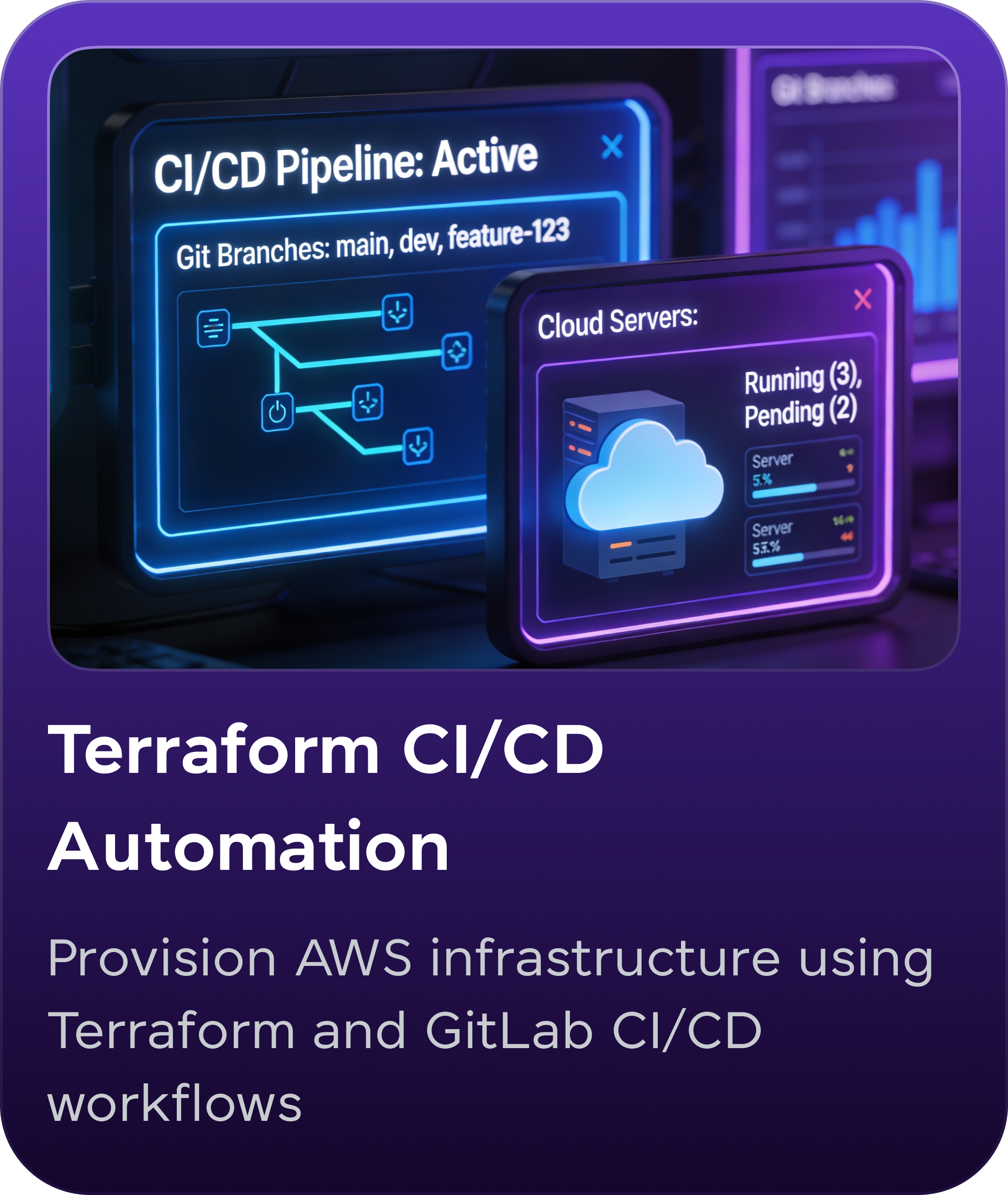
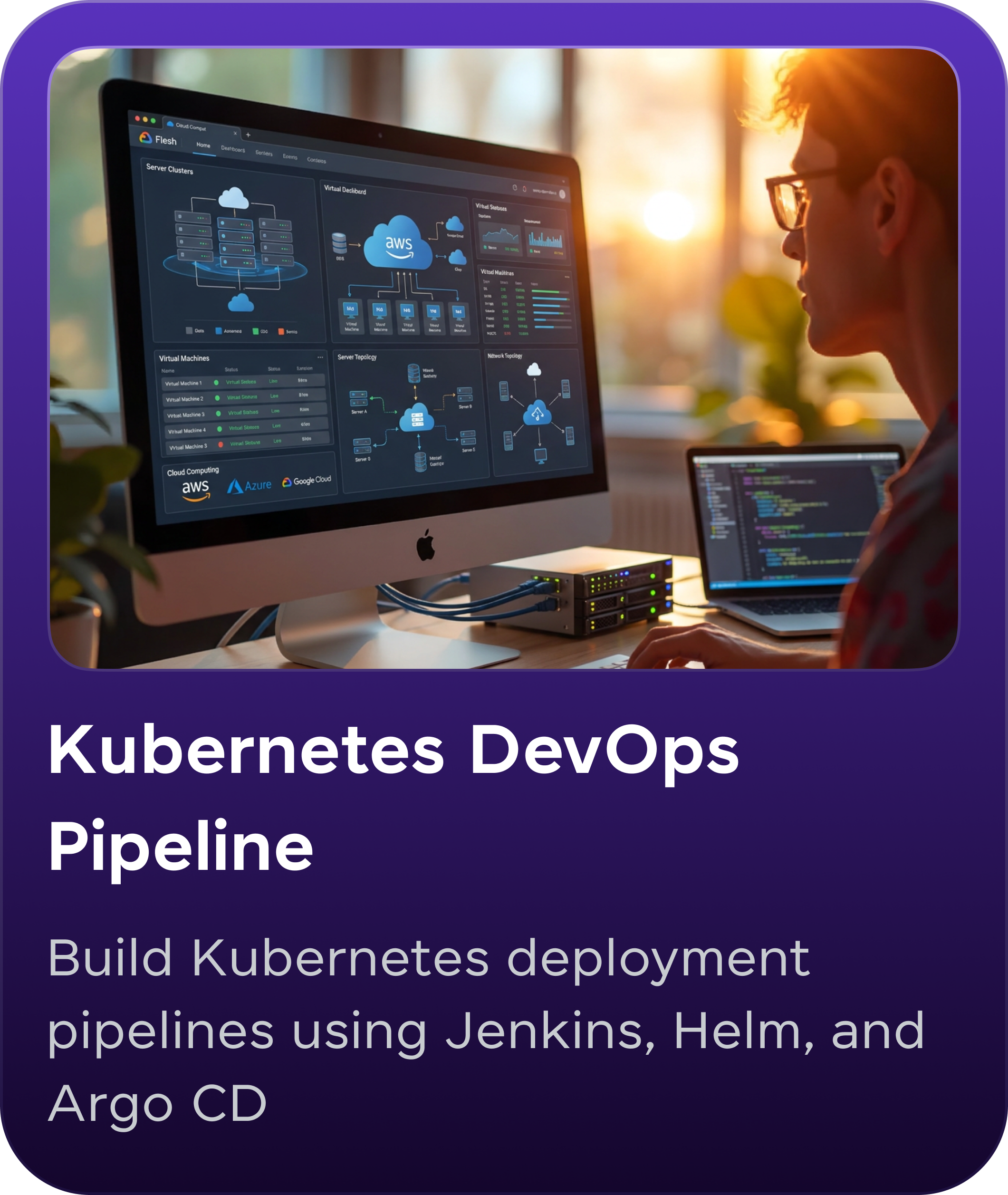
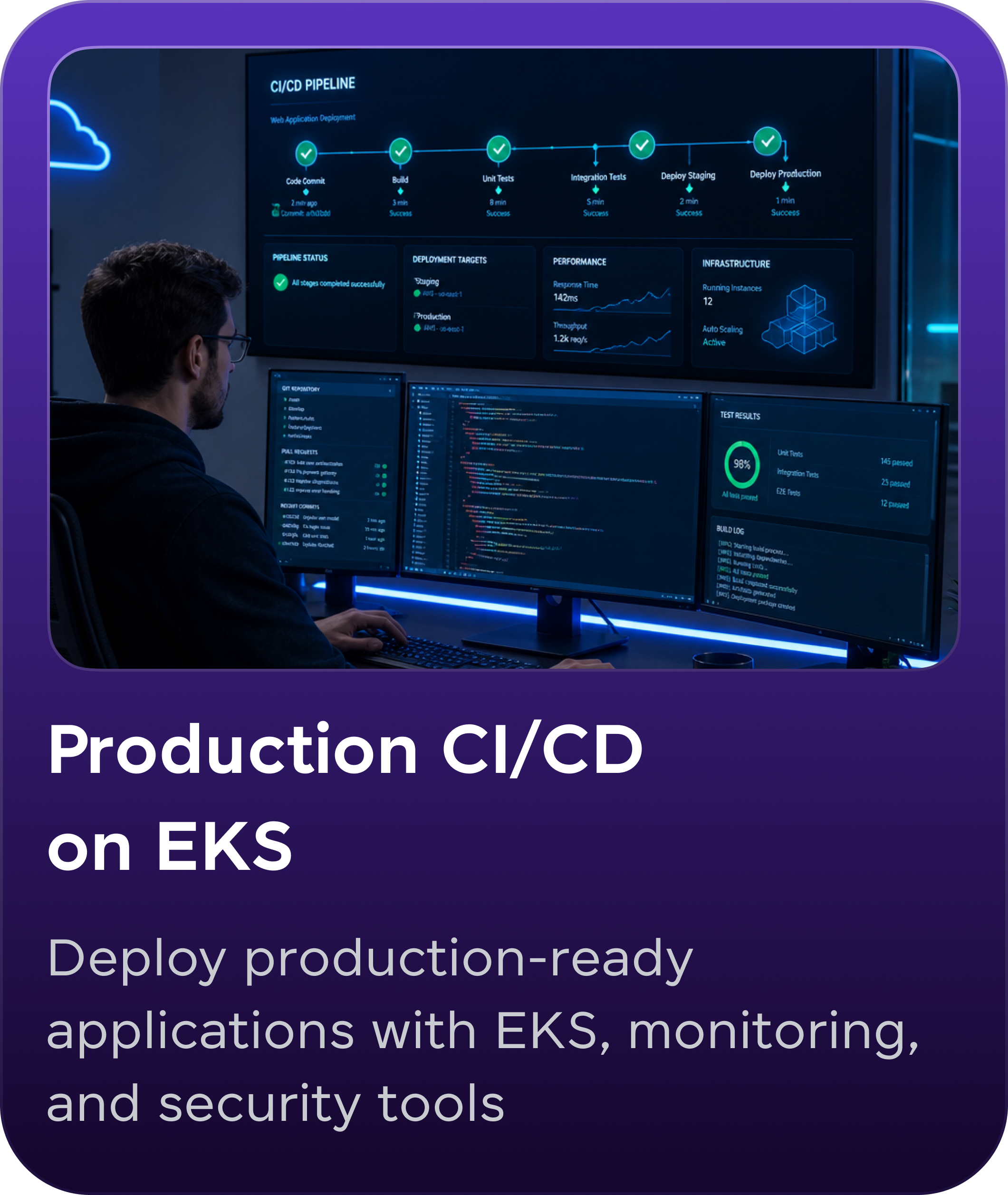
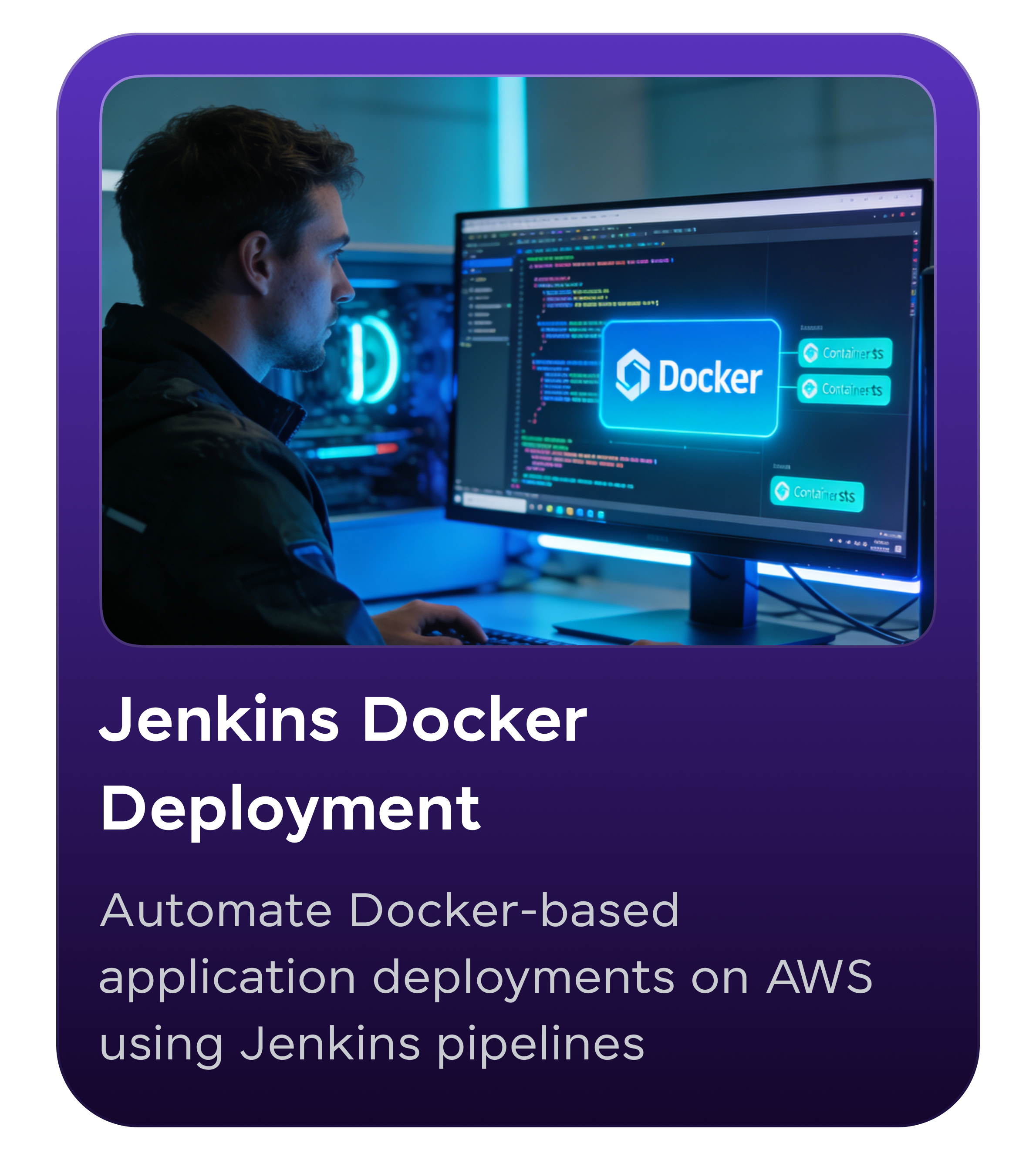
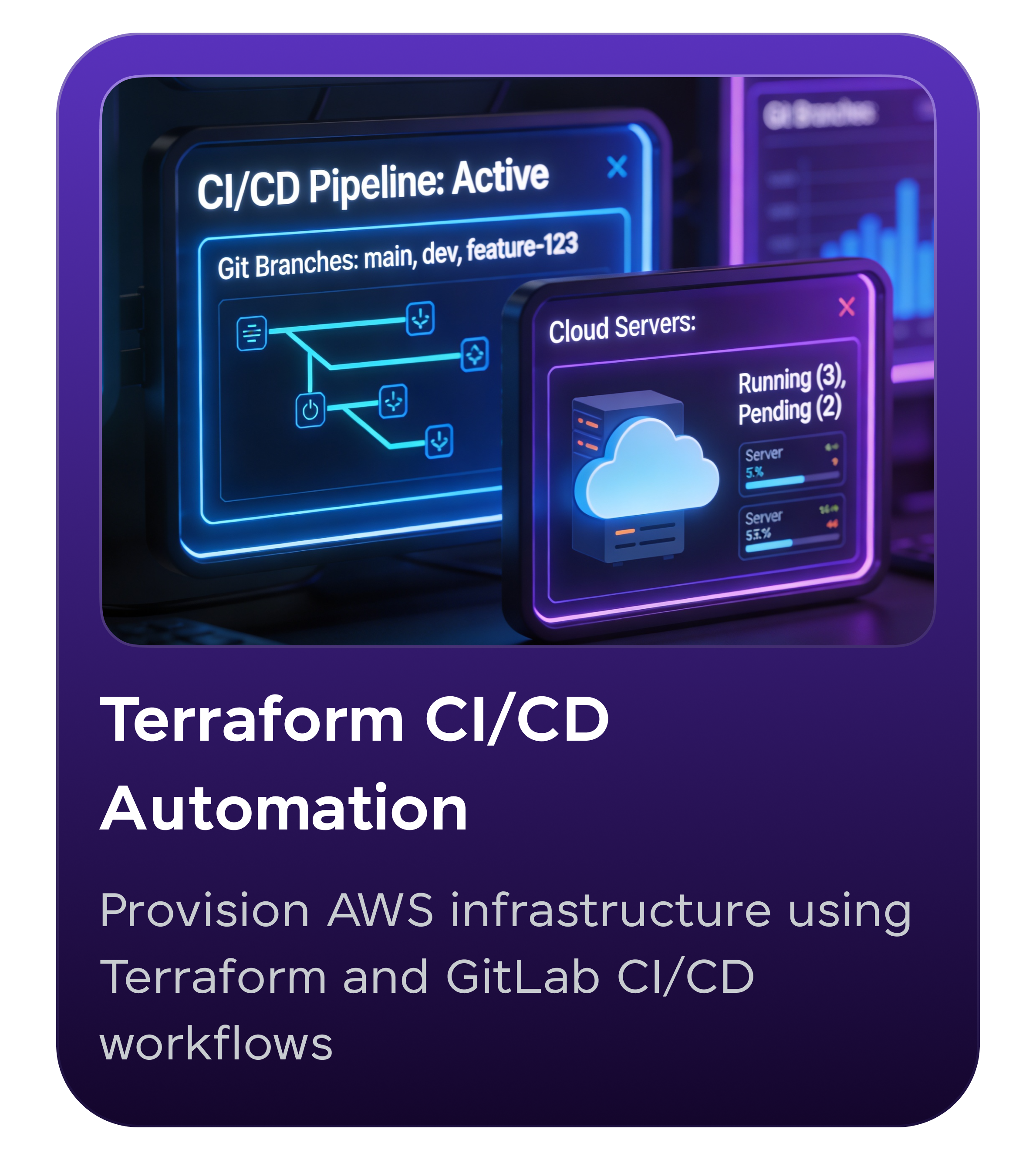
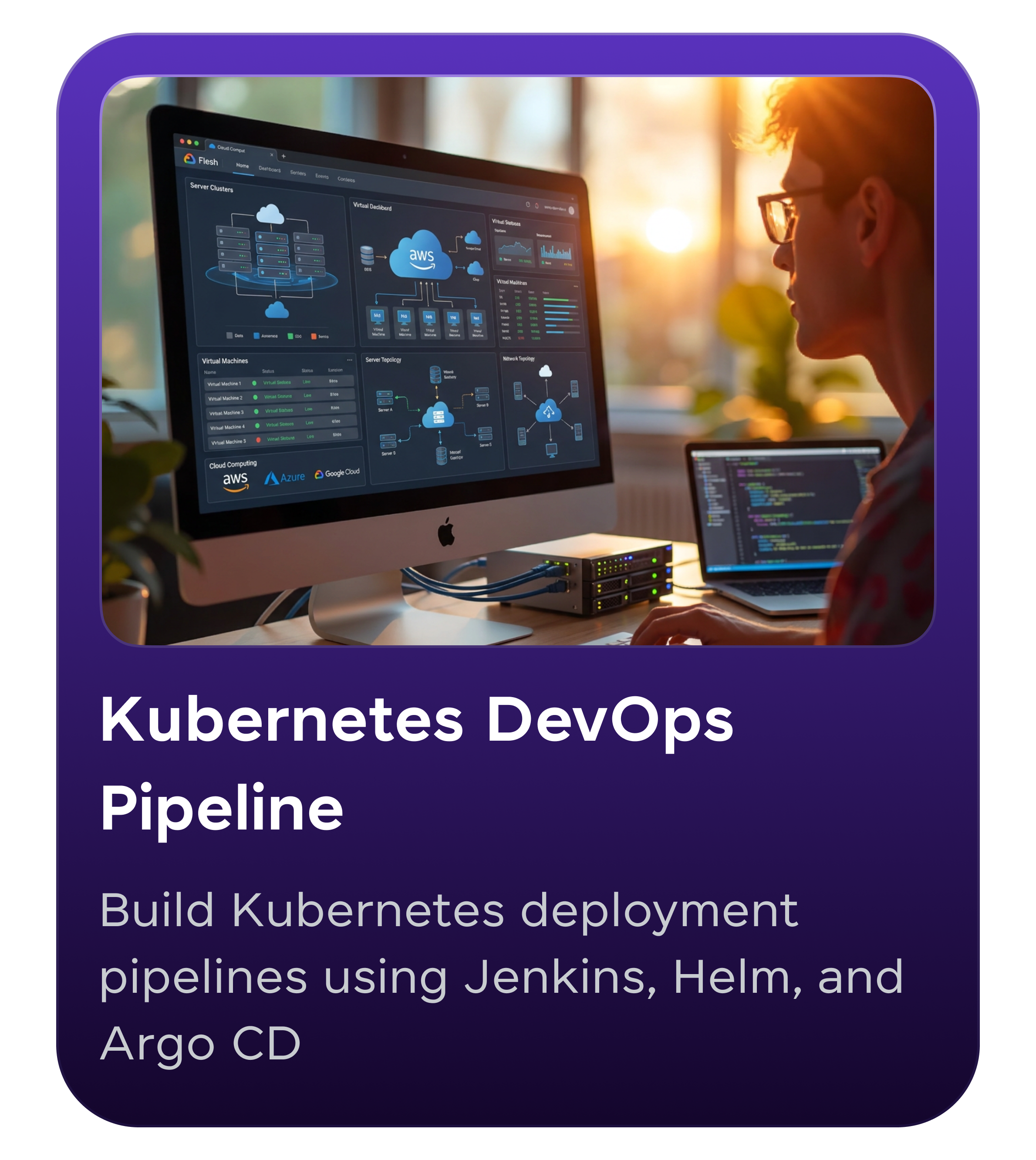
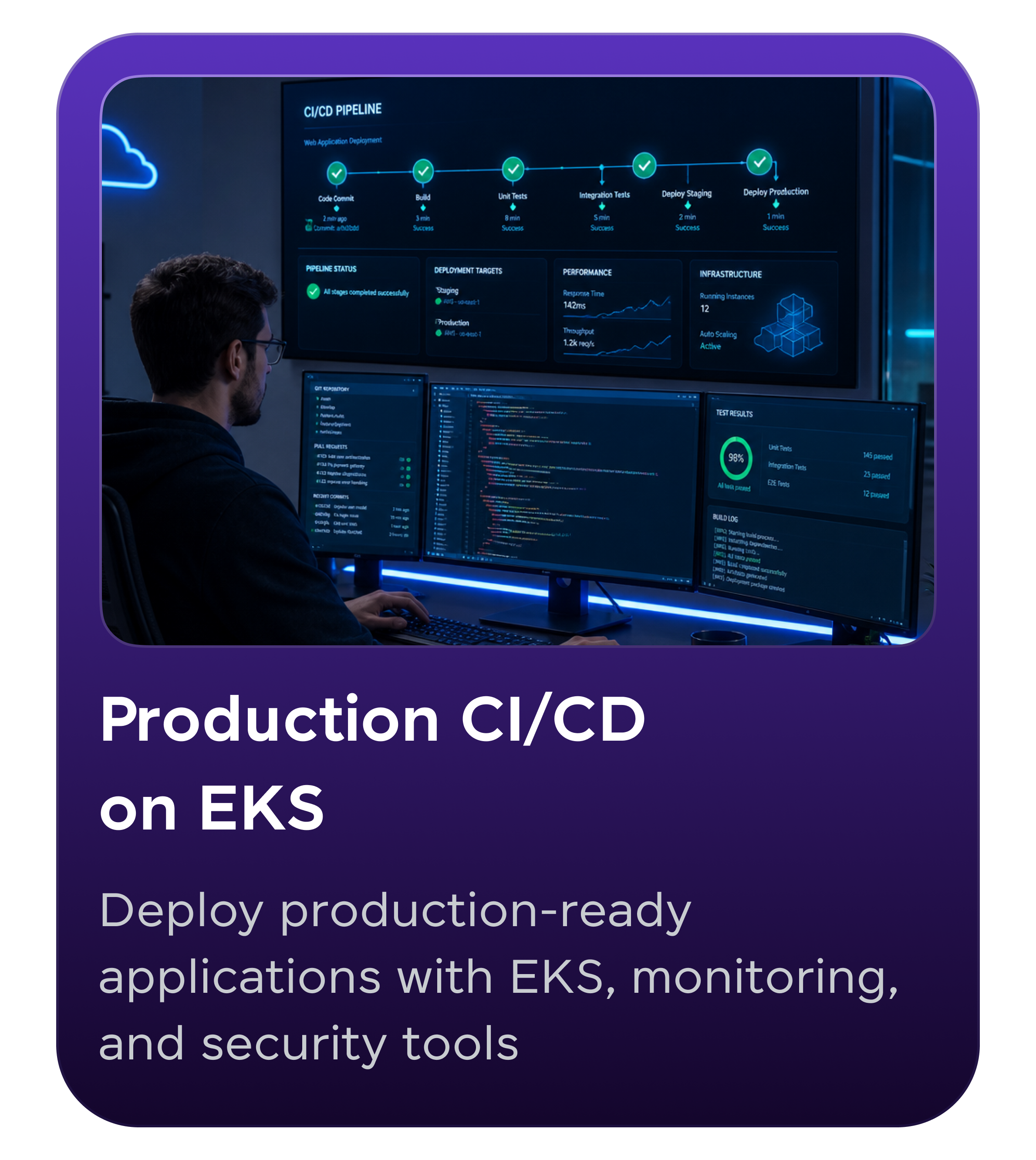
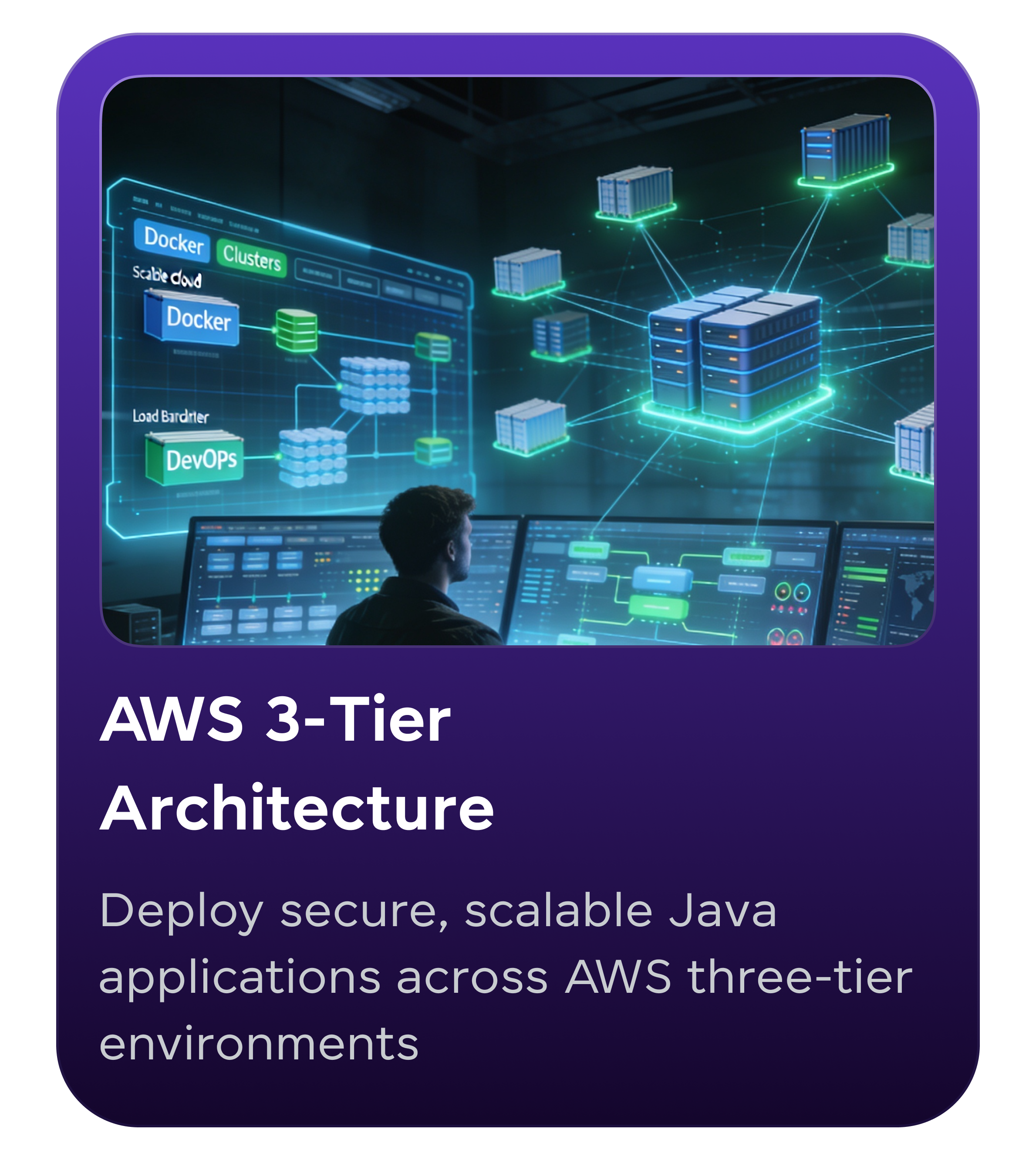
Apply your learning through practical projects across cloud, CI/CD, and deployment workflows.
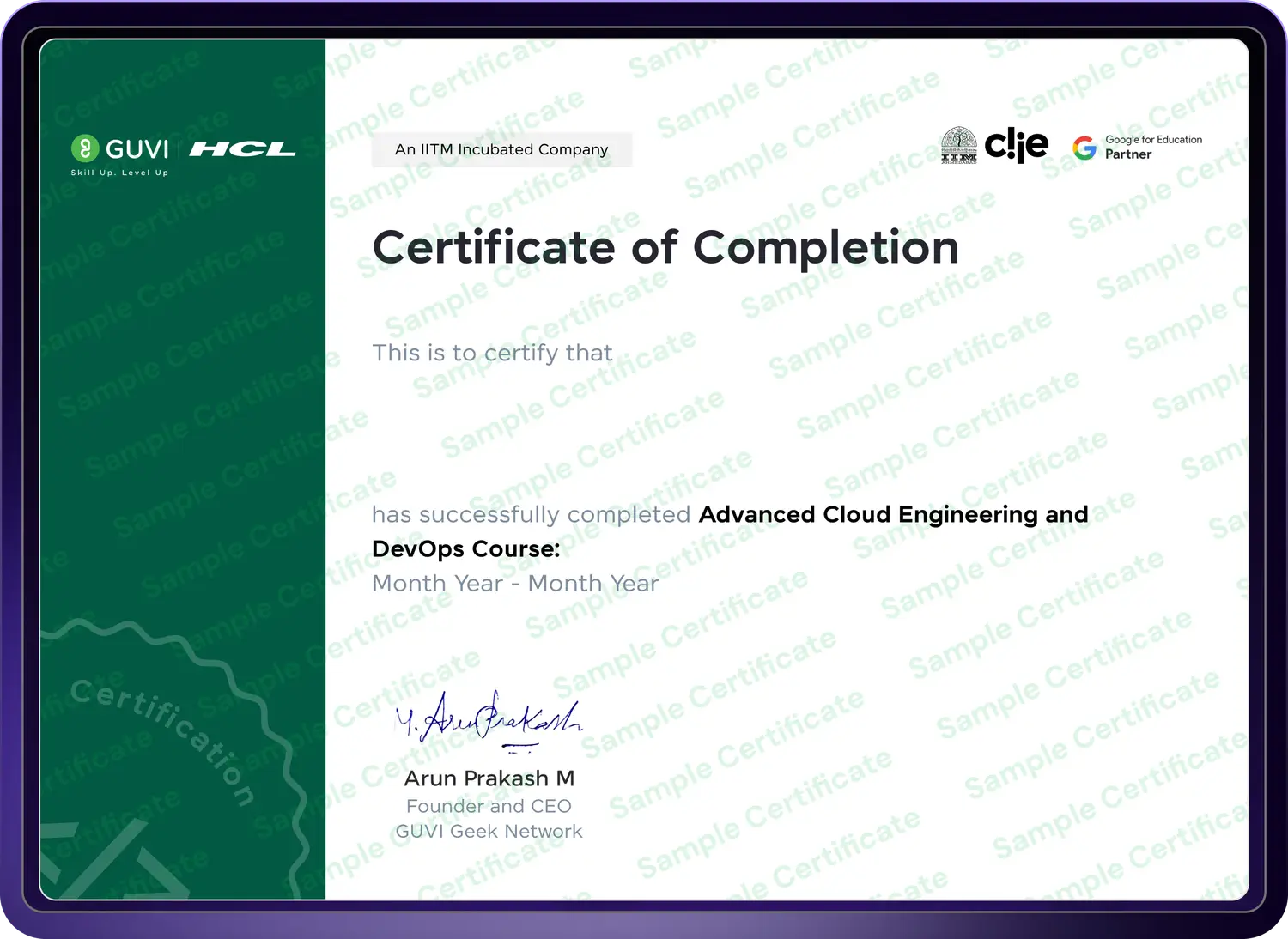
GET CERTIFIED
NSDC Certified Programme
Backed by national standards, validating your cloud and DevOps expertise.
Stronger Hiring Advantage
Gain recognition from recruiters with skills that signal job readiness.
Industry-Aligned Learning
Develop capabilities that match real-world cloud and DevOps practices.
NSDC Certified Programme
Backed by national standards, validating your cloud and DevOps expertise.
Stronger Hiring Advantage
Gain recognition from recruiters with skills that signal job readiness.
Industry-Aligned Learning
Develop capabilities that match real-world cloud and DevOps practices.
CAREER SUPPORT THAT DELIVERS
Prepare smarter, perform better, and get closer to your next opportunity.
1:1 Mock Interviews
1:1 Resume Evaluation
1:1 Mentor Guidance
Interview Preparation Guidance
Access to Job opportunities
DELIVERY FRAMEWORK
Step 1
Step 2
Step 3
Step 4
Step 5
Step 6
DELIVERY FRAMEWORK
Step 1
Step 2
Step 3
Step 4
Step 5
Step 6
PRICING
Choose a plan that helps you learn without any financial stress!
Learn From our Top Mentors
Jasmine Jeniffer J
Accenture
Data Scientist
Kousik Krishnan
Independant Trading Desk
Quant Trader
Shyam Kumar
Skit.ai
Machine Learning Solutions Lead
Thillaikkarasan M
Wells Fargo
Lead data scientist
How does it work?
Unlock the potential of Artificial Intelligence and Machine Learning with this comprehensive, industry-aligned program co-designed with Intel.
Step 1
Fill Out The Registration Form & Enter Your Coupon Code in the designated section and click Submit
Step 2
After Submission ,Our Career Counsellor Will Get In Touch With You and guide you throughout the payment process and help you start the course.
Step 3
Proceed to Mainbootcamp
Step 4
Complete the Program
Step 5
Get Placement Guidence
1. What is the duration of the programme?
The programme offers two options: a 4-months weekday batch or a 6-month weekend batch.
2. Is the programme conducted online?
Yes. All sessions, mentorship, and project work are conducted online.
3. Do I need prior coding experience to join?
No prior experience is required. You can start from scratch and build your skills step by step.
4. What roles can I apply for after completing this programme?
You can apply for roles such as DevOps Engineer, Cloud Engineer, Site Reliability Engineer (SRE), and Automation Engineer.
1. How does HCL GUVI support placements for this programme?
Placement support includes mock interviews, resume reviews, and guided preparation with industry experts. You’ll also get access to HyreNet to explore relevant job opportunities.
2. Will I get access to hiring partners after completing the programme?
Yes. You’ll be connected with 1000+ hiring partners, giving you access to relevant roles across cloud and DevOps.
3. Is placement guaranteed?
Placement support is provided to all eligible learners. This includes interview preparation, mentorship, and hiring partner access. Final outcomes depend on your performance and readiness.
4. How do mock interviews help?
Mock interviews simulate real hiring scenarios, helping you improve your responses, confidence, and overall interview performance.
1. What certification will I receive?
You’ll receive a NSDC and HCL GUVI certification that validates your cloud and DevOps skills and strengthens your profile.
2. What tools will I learn in this programme?
You’ll work with industry-standard tools including AWS, Docker, Kubernetes, Jenkins, Terraform, and monitoring tools like Prometheus and Grafana.
3. Will I work on real DevOps projects?
Yes. You’ll build hands-on projects such as CI/CD pipelines, containerized deployments, and monitoring dashboards to strengthen your portfolio.
4. What languages are the sessions available in?
Sessions are available in English and Tamil to support better understanding and accessibility.
1. Who will be teaching this programme?
You’ll learn from industry professionals with hands-on experience in cloud infrastructure and DevOps practices.
2. How much access will I have to mentors?
Mentors are available through live sessions, doubt-solving support, and feedback on your projects throughout the programme.
3. Is this programme beginner-friendly?
Yes. The programme starts with foundational concepts and gradually builds up to advanced cloud and DevOps topics.
4. How is the learning structured?
The programme includes live sessions, recorded content, hands-on projects, and continuous feedback to help you build job-ready skills.
Build Job-Ready Skills with HCL GUVI’s Advanced AI Cloud Computing and DevOps Course
Build Job-Ready Skills with HCL GUVI
Book a free career session
By submitting, I agree to be contacted via phone, SMS, or email for offers & products, even if I am on a DNC/NDNC list
Book a free career session
By submitting, I agree to be contacted via phone, SMS, or email for offers & products, even if I am on a DNC/NDNC list
By submitting, I agree to be contacted via phone, SMS, or email for offers & products, even if I am on a DNC/NDNC list.
By submitting, I agree to be contacted via phone, SMS, or email for offers & products, even if I am on a DNC/NDNC list.
Final Step! OTP Verification
Thank you for showing your interest in our course. Your offer code is redeemed, our Career Expert will connect with you to help you with further process.
Advanced Machine Learning
Advanced Classification Techniques
Sophisticated Clustering Methods
Dimensionality Reduction
Support Vector Machines (SVM)
Model Evaluation & Improvement
Introduction to MLOps: Bridge the gap between Machine Learning and real-world deployment
What is MLOps? Why is it important?
Model versioning and tracking
Creating reproducible ML workflows
Data version control and pipeline automation
Introduction to containers (Docker) for ML reproducibility
Deployment strategies
Infrastructure options: cloud, on-prem, hybrid
Monitoring models in production: drift, bias, accuracy
Collaboration across teams (Dev, Data Science, Ops)
CI/CD pipeline basics for ML projects
Security and ethical considerations in ML deployments
Hands-on demo
Introduction to Neural Networks
What are neural networks and how they work
Biological inspiration vs artificial implementation
Structure of a neural network: neurons, layers, weights, and biases
Activation functions: ReLU, sigmoid, tanh, softmax
Forward propagation and loss calculation
Backpropagation and the learning process
Gradient descent and optimization techniques
Introduction to deep learning frameworks: TensorFlow and PyTorch
Building a simple neural network from scratch
Visualizing the training process and performance metrics
Overfitting and regularization techniques
Real-world applications of neural networks
Key terminology: epochs, batches, learning rate, accuracy
Deep Neural Networks
Understanding the architecture of Deep Neural Networks (DNNs)
Benefits of depth: capturing complex patterns and hierarchies
Hidden layers: how many, how deep, and why it matters
Training challenges in deep networks
Building and training DNNs with TensorFlow/Keras
Activation functions in deep networks
Monitoring performance: loss curves, accuracy tracking
Model evaluation and validation techniques
Using callbacks and checkpoints
Real-world DNN applications and case studies
Best practices for scaling deep models
Applied Deep Learning with PyTorch
Introduction to PyTorch: tensors, automatic differentiation, and the computation graph
PyTorch vs other frameworks: why researchers and developers prefer it
Building neural networks using torch.nn and nn.Module
Implementing forward passes and activation functions
Loss functions and optimizers using torch.optim
Writing custom training and validation loops
Efficient data loading using torch.utils.data.Dataset and DataLoader
Handling overfitting with dropout, regularization, and early stopping
Visualizing metrics and loss curves with TensorBoard
Saving and loading models using state_dict and checkpoints
Introduction to Intel Arc GPU architecture and AI acceleration
Setting up PyTorch with Intel® Extension for PyTorch (IPEX)
Training models on Intel Arc GPU
Case study: Training an image classifier on Intel Arc GPU
Best practices for deploying models trained with PyTorch
Introduction to Computer Vision with CNNs
Introduction to Computer Vision and real-world applications
Challenges in interpreting images through AI
Image representation: pixels, channels, resolution, and color spaces
Why CNNs? Understanding the limitations of traditional neural networks for vision tasks
Fundamentals of Convolutional Neural Networks (CNNs)
Building a simple CNN architecture from scratch
Image classification workflow using TensorFlow/Keras or PyTorch
Working with image datasets (CIFAR-10, MNIST, etc.)
Data preprocessing and augmentation techniques
Model training, validation, and evaluation
Visualization of learned filters and feature maps
Transfer learning and using pre-trained CNNs (VGG, ResNet, MobileNet)
Performance tuning and avoiding overfitting in CNNs
Hands-on: Building a digit/image classifier using CNN
Introduction to edge deployment on AI-enabled devices
Natural Language Processing (NLP)
Introduction to NLP and its real-world applications
Understanding structured vs unstructured text data
Text preprocessing techniques
Introduction to Generative AI
What is Generative AI?
Real-world applications of generative models
Generative vs traditional AI: key differences
Overview of foundational models
Understanding autoencoders and latent spaces
Introduction to Generative Adversarial Networks (GANs)
Introduction to Diffusion Models
Introduction to Large Language Models (LLMs)
Creative tools powered by Gen AI
Ethical considerations in content generation
Understanding hallucinations and content validation
The role of prompt engineering in content control
Introduction to open-source generative AI tools
The future of Generative AI and emerging trends
Large Language Models (LLMs) and Prompt Engineering
Introduction to LLMs: what they are and how they work
Overview of popular models: GPT, LLaMA,Claude, Mistral, and Gemini
LLM capabilities and limitations
Tokenization and model context window
Few-shot, zero-shot, and chain-of-thought prompting
Prompt Engineering fundamentals
Using OpenAI’s GPT and HuggingFace models via APIs
Tools for prompt testing and refinement
Introduction to prompt chaining and dynamic prompt templates
Safety, alignment, and ethical concerns when working with LLMs
Hands-on: Crafting and refining prompts for real-world tasks
Building AI-Powered Applications with Flask and Streamlit
Introduction to web applications for AI and ML
Overview: Flask vs Streamlit – use cases and strengths
Basics of Flask
Structuring a basic AI application
Integrating pre-trained ML/LLM models into apps
Connecting front-end inputs to back-end predictions
Uploading files and handling user input
Hosting local vs cloud-based applications
Debugging and testing application workflows
Preparing apps for deployment (Heroku, Render, or cloud)
UX tips for building user-friendly AI interfaces
Advanced Prompt Engineering and LLM Fine-Tuning
Beyond the basics: Prompt refinement strategies for precision
System prompts and role-based persona engineering
Few-shot learning with structured examples
Chain-of-thought prompting and multi-step reasoning
Embedding-based prompts and semantic similarity
Prompt chaining for multi-turn, multi-step tasks
Retrieval-augmented prompting vs vanilla prompting
Controlling tone, length, style, and response format
Function calling and tool use with LLMs (OpenAI, Claude)
Limitations of prompting and when fine-tuning is needed
Introduction to fine-tuning LLMs
Datasets for fine-tuning (custom, open-source)
Using Hugging Face tools to fine-tune a model (e.g., LLaMA, Mistral)
Evaluating fine-tuned models: performance and generalization
Best practices for safe and ethical deployment
Reinforcement Learning: Fine-tune generative models through feedback-driven learning
Overview of RL in the context of Generative AI
What is Reinforcement Learning from Human Feedback (RLHF)?
Role of feedback loops in fine-tuning LLM behavior
Architectures that support RLHF (e.g., PPO, DPO)
Stages of RLHF
Designing reward models for generative tasks
Aligning language models with ethical guidelines and safety constraints
Case study: How OpenAI uses RLHF in ChatGPT
RLHF vs supervised fine-tuning – when to use what
Challenges in scaling RL for large models
Bias, interpretability, and feedback reliability
Hands-on example: Use a small-scale transformer with simulated feedback
Tools and libraries: TRL (Hugging Face), Accelerate, RLlib
Retrieval-Augmented Generation (RAG) for AI Models
What is Retrieval-Augmented Generation (RAG) and why it matters
Key components of a RAG pipeline
Vector databases: FAISS, Pinecone, Weaviate overview
Document chunking strategies for optimal retrieval
Text embeddings and semantic search
Creating knowledge bases from PDFs, HTML, Notion, etc.
Connecting LLMs with retrieval layers using LangChain
Prompting with contextual information from retrievers
RAG vs traditional search vs fine-tuning: when to use what
Deploying a basic RAG-powered Q&A app
Evaluation metrics: relevancy, latency, hallucination reduction
Best practices for scaling RAG systems
Privacy and compliance in RAG-powered enterprise AI
Case studies: RAG in customer support, internal documentation bots
Building a Local Retrieval-Augmented Generation (RAG) System on Intel AI PC
Agentic AI – Autonomous AI Systems
What is Agentic AI and how it differs from traditional AI models
Use cases of AI agents in research, productivity, business, and automation
Core components of an AI agent: memory, planning, reasoning, and tool use
Frameworks for building agents
Agent architecture and task decomposition
Integrating tools and APIs into agent workflows
ReAct (Reasoning + Acting) and other planning strategies
Short-term vs long-term memory in agent systems
Using vector databases and document loaders as knowledge tools
Creating multi-agent systems with specialized roles
Orchestration of concurrent agents for complex goals
Logging, monitoring, and controlling autonomous behavior
Security, constraints, and ethical boundaries in autonomous AI
Hands-on: Build a research assistant or data analyst AI agent
Future directions: self-improving and recursive agents
Setting up Docker for AI Development
Cloud Deployment for LLM-Based Applications
Introduction to cloud computing: key concepts and benefits
Overview of major platforms: AWS, Azure, GCP, and Intel Developer Cloud
Cloud infrastructure essentials: compute, storage, networking
Hosting and deploying containerized AI apps with Docker
Using cloud services to run FastAPI or Streamlit apps
Deploying LLM APIs (e.g., OpenAI, Hugging Face) via cloud functions or REST endpoints
Environment setup and configuration
Introduction to serverless computing (Lambda, Azure Functions, Google Cloud Functions)
CI/CD pipelines for AI app updates
Working with secrets, environment variables, and model endpoints securely
Logging, monitoring, and scaling applications in the cloud
Using GPU instances to run inference with large models
Cost management and optimization tips
Hands-on: Deploy a simple LLM-powered chatbot or document Q&A system on the cloud
Bonus: Introduction to Intel Developer Cloud for AI acceleration